
Why we’re different
Designed by
20,000 hours.
over the past 13 years
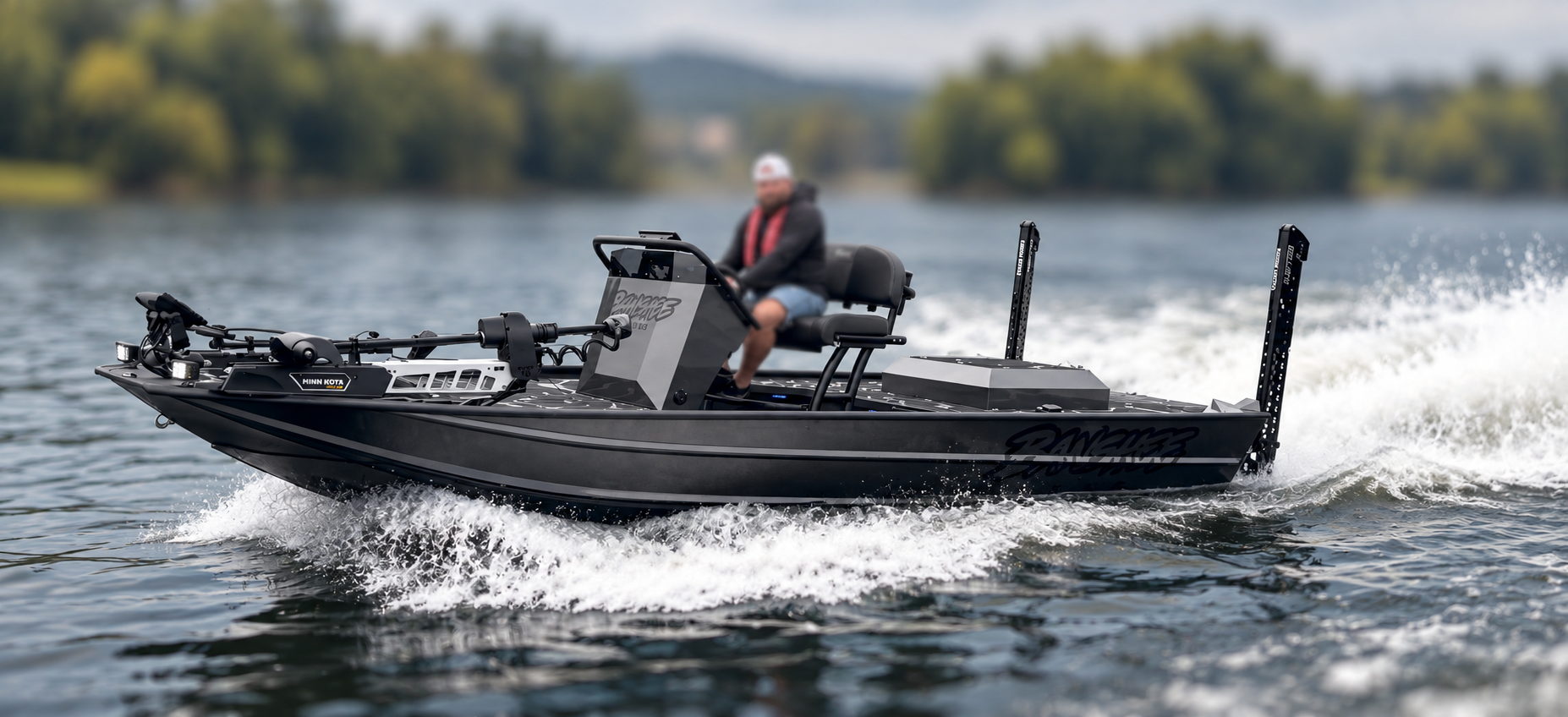
Every decision in these hulls traces back to a day on the water. 20,000 hours of guiding the Susquehanna, and boats built before this one that showed us exactly what to change.
Joe has guided the Susquehanna and Juniata since 2013. For most of that time he was someone else’s customer — commissioning custom jet boats from other builders and putting them through full seasons of hard use. That is where the list below came from: what worked, what didn’t, and where those boats came up short.
Andrew brought the rigging, electronics and engineering side. Between them was a boat that did not exist yet, so they built it.
The layout came off the water
Joe has guided the Susquehanna since 2013 and has built boats before this one. Where the storage goes, how much open deck two anglers need, where you stand to fight a fish — none of that was decided on a computer. It came out of days where the last boat got it wrong.
Built for contact
Shallow rivers have rock in them, and you will hit it. Years of running that water showed us exactly where conventional boats take abuse, so the bottom is reinforced for it rather than built to the lightest spec that floats.
Proven power, not the trend
We build around power that is still serviceable in ten years rather than whatever is fast this season. Inboards run automotive-based V6s and V8s engineered for thousands of hours. Outboards run Mercury, which means a service network anywhere you trailer to.
You talk to the builders
There is no sales floor and no middleman. Joe and Andrew take the call, quote the boat, build it, and answer the phone after you take delivery.
It fishes bigger than it measures
Wider, longer front decks put the usable space where you actually stand. Storage, seating, electronics, rod boxes and controls are placed off more than a decade of refinement by someone who is on the water hundreds of hours a year.
It is not a jon boat
Shallow-water boats do not have to look like a box with a motor on it. These have deliberate lines, and they are finished to a standard that looks every bit as good as the boat performs.
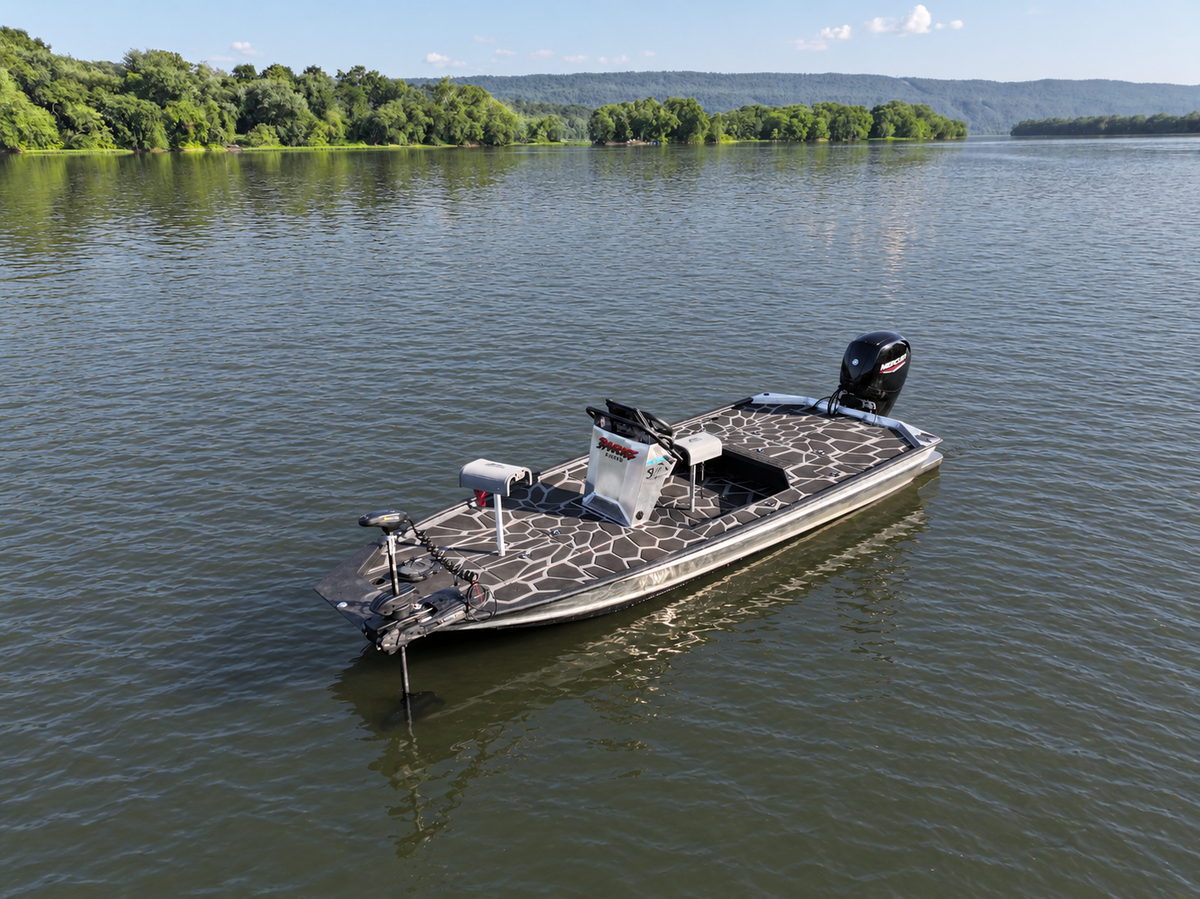
SR 60 Outboard Jet
Outboard jet drive.
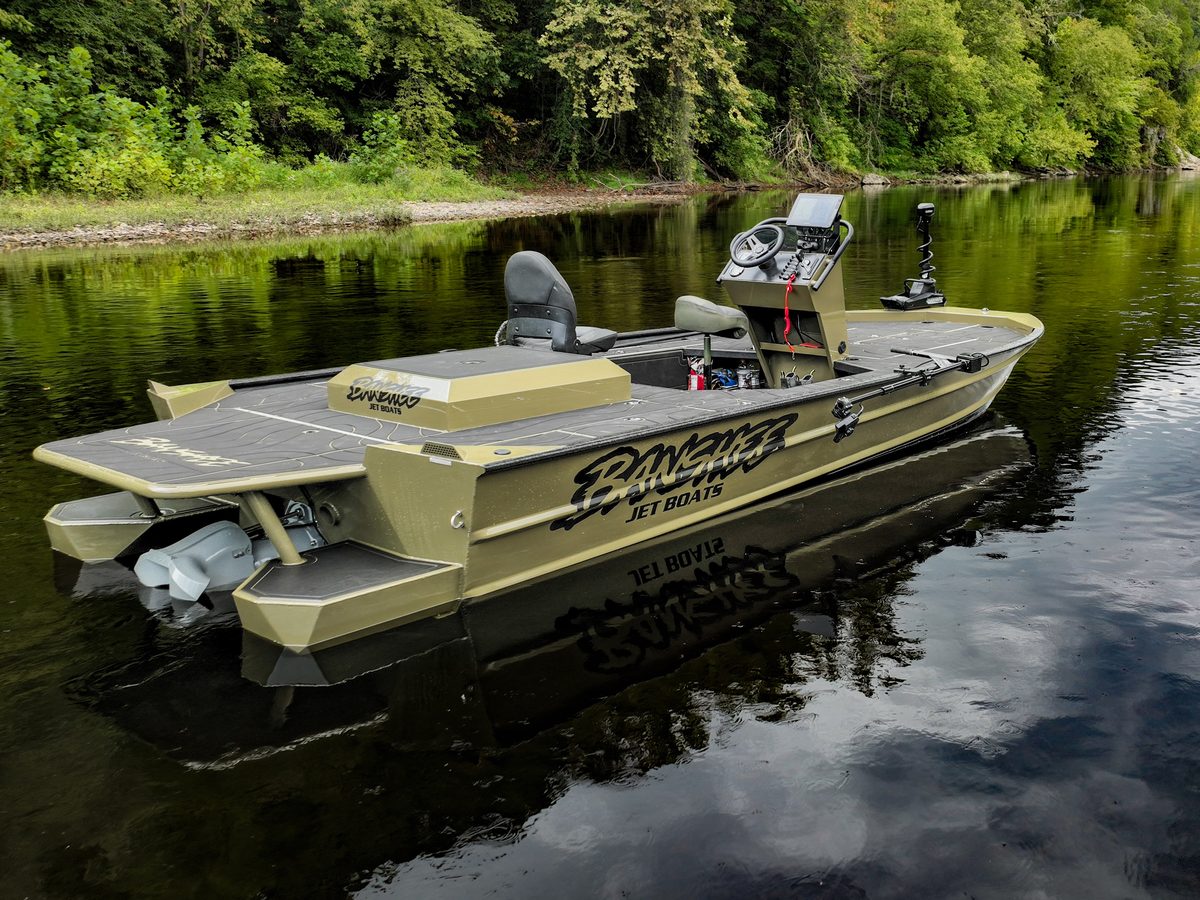
SR 72 Inboard Jet
Inboard jet drive.
Choosing
SR 60 or SR 72.
Both are welded aluminum and both are built for the same water. The model number is the bottom width; the drive is the real decision.
| SR 60Outboard Jet | SR 72Inboard Jet | |
|---|---|---|
| Where they differ | ||
| Drive | Outboard jet, Mercury power | Inboard jet, V6 or V8 power |
| Bottom width | 60″ | 72″ |
| Beam | 84″ | 96″ |
| Hull length | 18′ 6″ | 19′ 6″ |
| Overall length | 20′ | 21′ 6″ |
| Trailer width | 7′ 10″ | 8′ 6″ |
| Height on trailer | 6′ 6″ | 7′ 2″ |
| Compartments | 11 | Up to 15 |
| Rod storage | 2 rod boxes | Lockers to 9′+ |
| Best for | Lighter, simpler service | More deck, nothing below the transom |
| Same on both | ||
| Bottom plate | .190″ 5086 | |
| Armor plating | .250″ 7000-series | |
| Sides / decking | .125″ / .100″ | |
| On the trailer | 25′ | |
| Livewell | Yes | |
| Full specs | SR 60 specs | SR 72 specs |
Ready to start?
The first call costs nothing and settles most of it.