
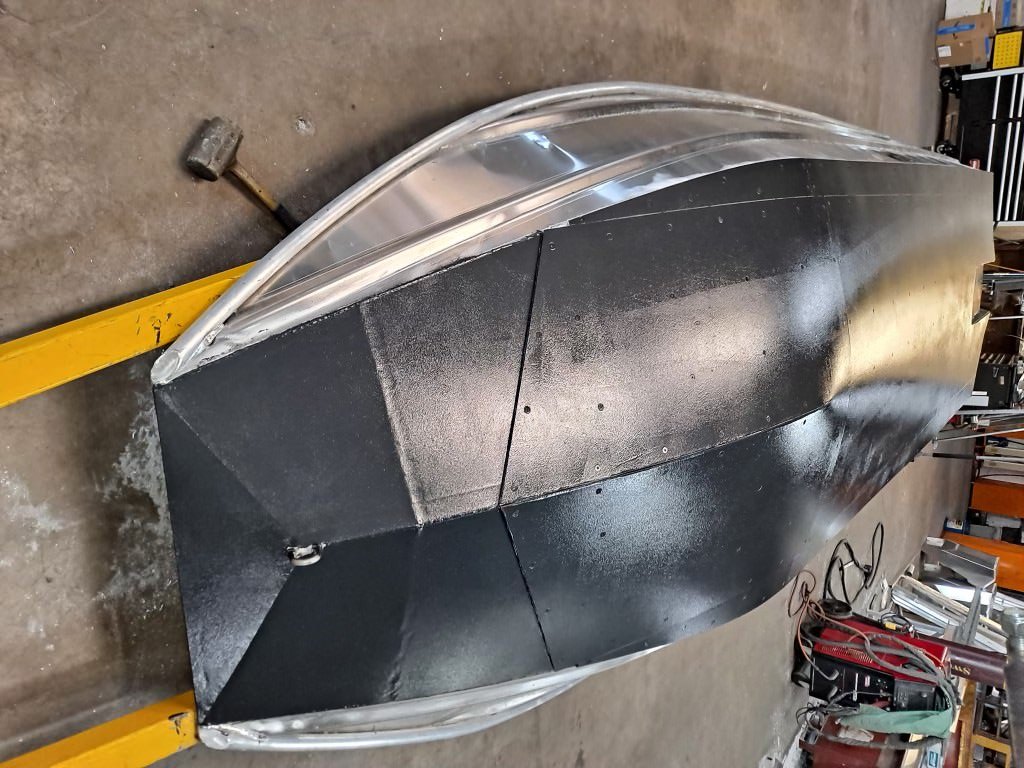
Not all UHMW is created equal
There are two basic categories customers should understand:
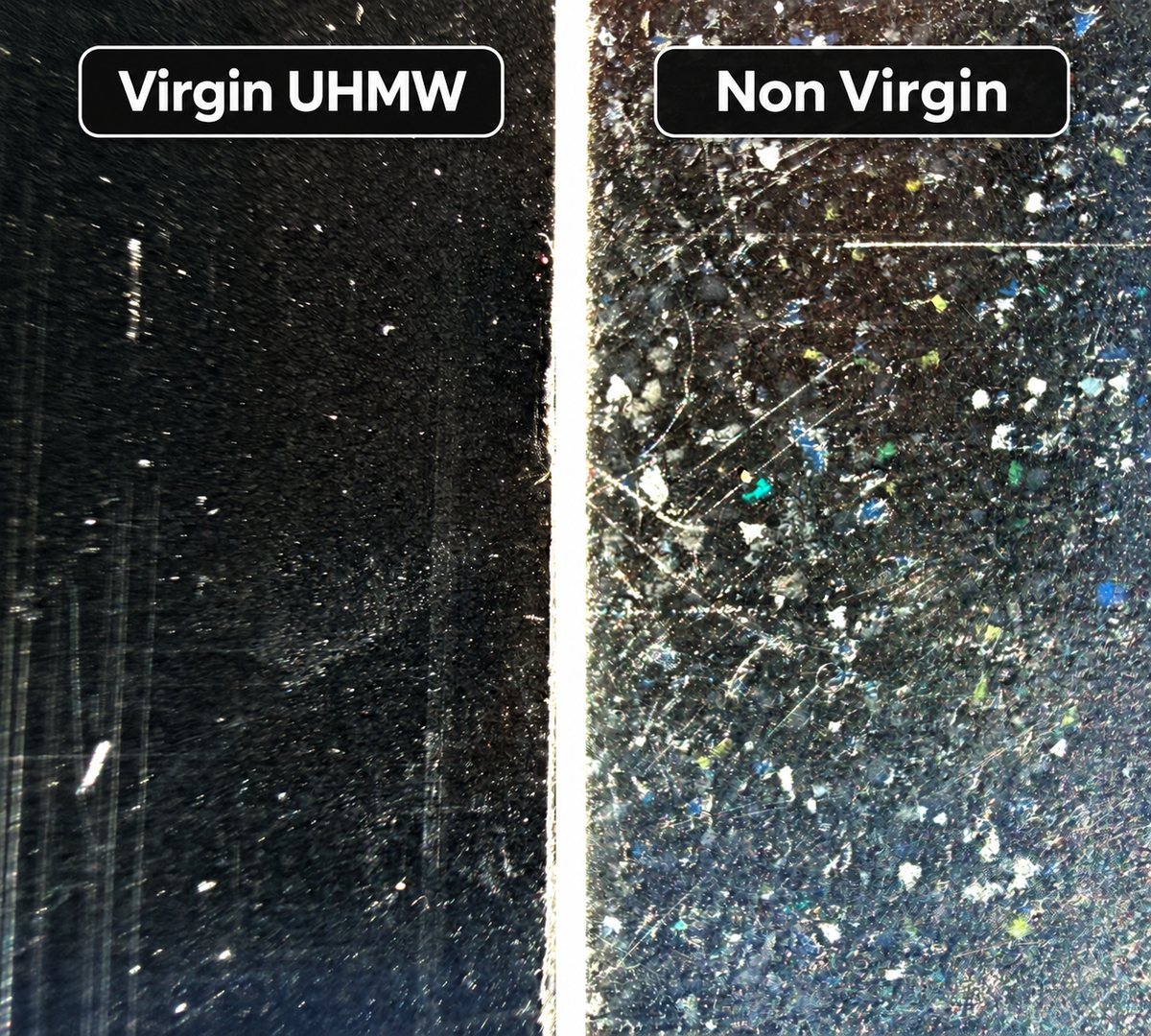
Virgin UHMW
High-impact areas
The material designed for high-impact areas. If UHMW were going to be used on the bottoms of our boats, this is what we would choose.
Non-virgin / re-grind UHMW
Lower-impact wear surfaces
Made from recycled material and less expensive — and it absolutely has its place. A great choice where abrasion resistance is the primary goal: boat sides, trailer bunks, guides and other wear surfaces.
The bottom of a shallow-water jet boat is different. When a boat strikes rocks at speed, the material is subjected to extremely high impact loads. For these areas, virgin UHMW is the material designed for the job.
What experience taught us
The team has owned and built custom boats using both virgin and non-virgin UHMW. The difference became apparent through real-world use.
Lower-quality re-grind wore and tore significantly faster under hard impacts, and we experienced problems with sheets separating from the hull. Because re-grind is made from recycled material, it isn’t bonded together as tightly as virgin UHMW, so on a hard hit chunks of non-virgin material can shear or tear right off the sheet. Even virgin UHMW can gouge, cut and eventually wear. A sharp rock or trash in the river, such as steel or rebar, will cut UHMW like a hot knife through butter, and UHMW adds very little structural strength to the hull itself. Its primary advantages are abrasion protection and its ability to slide across obstacles.
That experience changed the way we build boats.
Thermal expansion: the problem you never heard about
UHMW and aluminum expand and contract at dramatically different rates. From a winter cold snap to a hot summer day, a boat can easily see temperature swings of 100°F or more. Over a 100°F swing, across a 6-foot-wide sheet:
UHMW
Moves roughly 7/8″
A 6-foot-wide sheet of UHMW can change dimension by roughly 7/8″ over the swing.
Aluminum
Moves around 1/8″
The aluminum hull underneath moves only around 1/8″ over the same swing.
The result: a hull that leaks
Egged-out fastener holes
Every season of expansion and contraction works the fasteners back and forth in the hull. Over time the fastener holes become egged out, and once they are oversized, water finds its way through — a hull that leaks, and keeps getting worse.
The problem is that the two materials are mechanically fastened together.
Repeated expansion and contraction can work fasteners and attachment points over time, contributing to enlarged holes, loosened or broken fasteners and separation between the UHMW and hull.
Virgin UHMW is considerably better suited to demanding applications than low-quality re-grind, but it still has the fundamental expansion mismatch of UHMW attached to an aluminum hull.
Why Banshee uses 7000-series aluminum armor
Once you price quality virgin UHMW and the hardware and labor required to install it correctly, the cost advantage begins to disappear.
That’s why we chose a different approach.
Banshee uses heavy 7000-series aluminum armor in high-impact areas. Instead of simply covering the hull, our armor becomes part of the structure and adds strength where the boat needs it most. Its hardness helps resist gouging and allows the boat to slide across rock without introducing the large thermal-expansion mismatch of UHMW mechanically fastened to an aluminum hull.
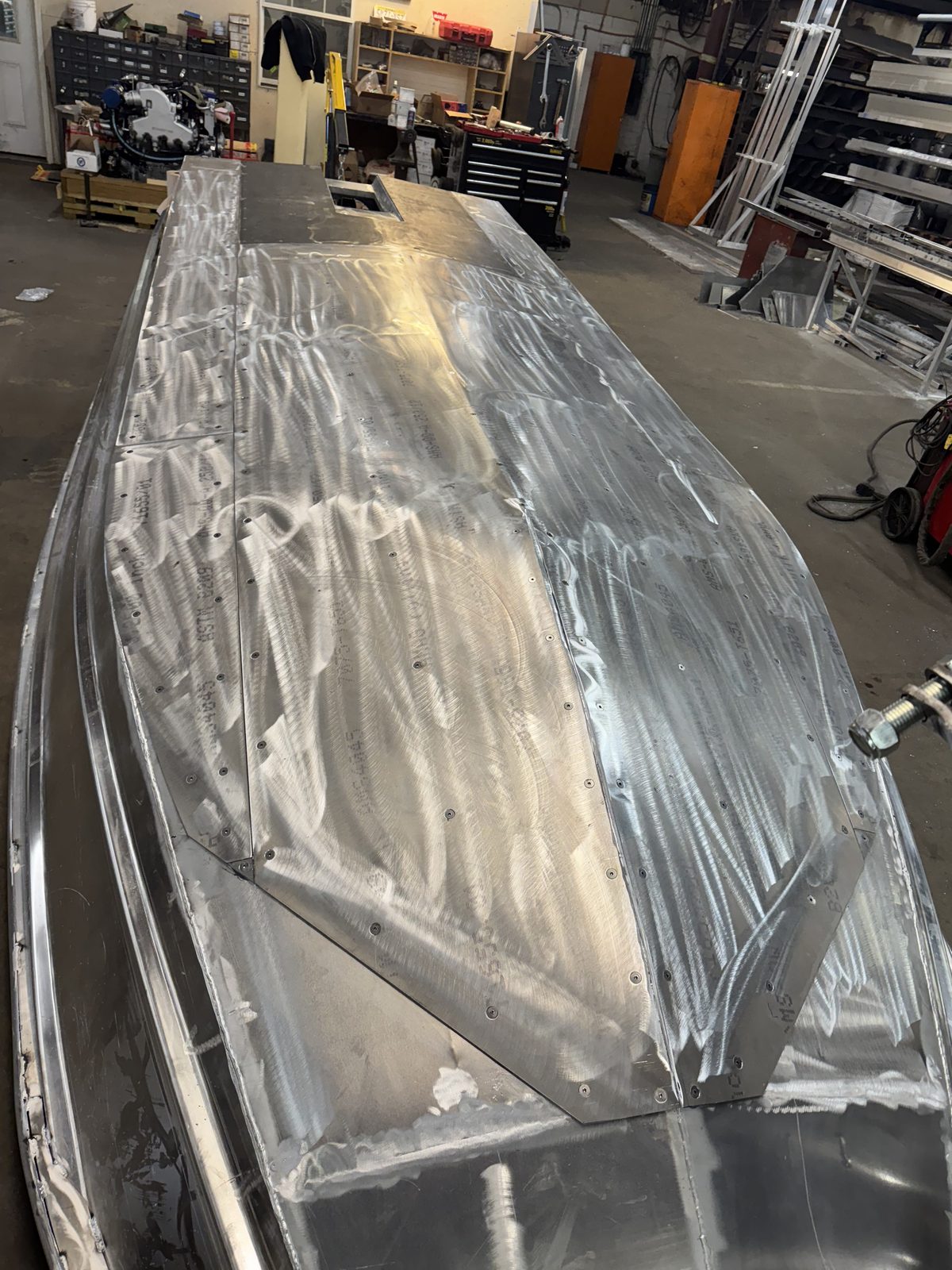
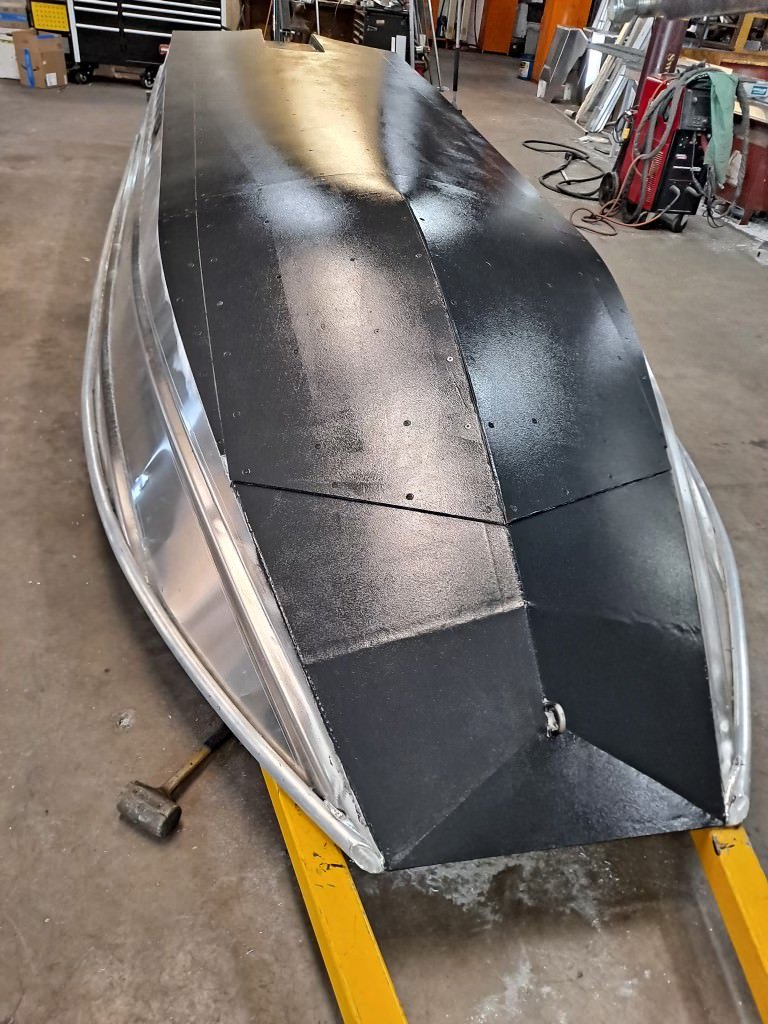
UHMW isn’t a bad material, and re-grind isn’t a bad material when it’s used for the right application. We simply don’t believe UHMW is the magic bottom protection it’s sometimes made out to be.
For the way our boats are intended to be used, we’d rather armor the hull with aluminum.
We don’t say no to UHMW because we know too little about it. We say no because experience taught us too much about it.
Already have UHMW? Check it regularly.
If your boat already has UHMW, periodically inspect the attachment hardware — especially on boats stored outdoors through large seasonal temperature swings.
Lightly check each fastener by hand to make sure it is secure. Do not over-tighten it. If a fastener spins freely, appears broken or the sheet begins separating from the hull, have it repaired immediately.
Pay particular attention to the leading edges of every sheet. Catching a failed fastener early can prevent a much larger — and potentially dangerous — sheet separation later.